Freight First
scroll

Self-initiated concept. The ask: most logistics brands lean on static trust signals, navy, gold, and a shield icon that hasn't moved since 1998. FreightFirst needed an identity built to move first and print second. A system designed for motion from the start, not a logo that got animated after the fact.Logistics brands often rely on generic symbols and outdated typography. The challenge was to create a visual identity that feels modern and technical while maintaining the credibility expected in a B2B industry.
01 — THE BRIEF
02 - THE ANGLE
A logistics mark usually sits still. This one had to imply movement in its static form, so the motion system wasn't decoration bolted onto a finished logo. It had to be built into the geometry from the first sketch. The angle: the F1 mark's bracket shape isn't just a container, it's a track. Everything moves through it.
03 - IDENTITY SYSTEM
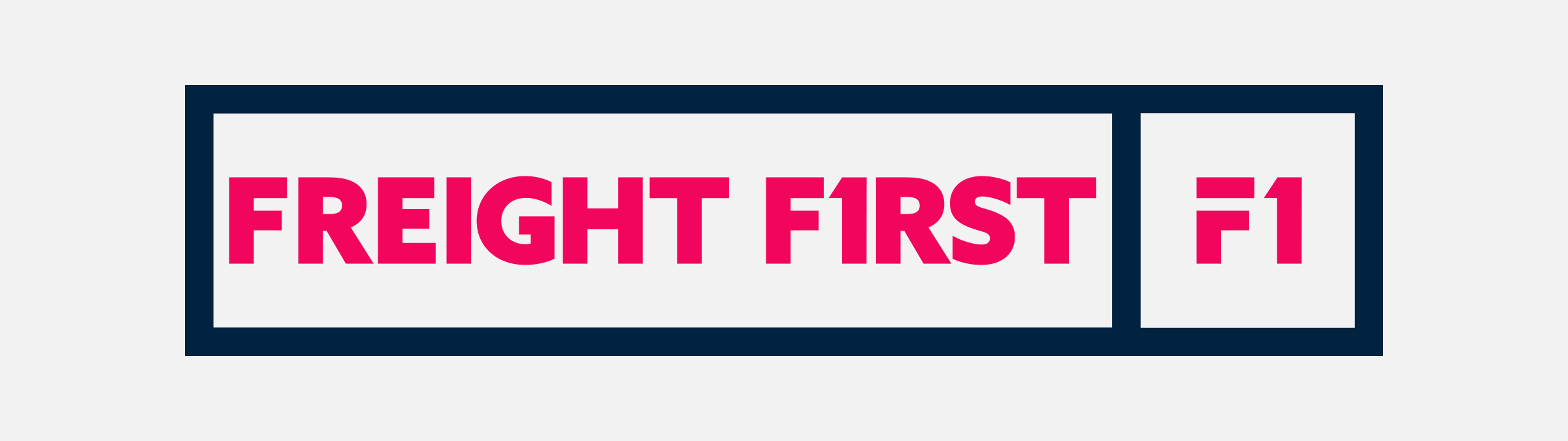
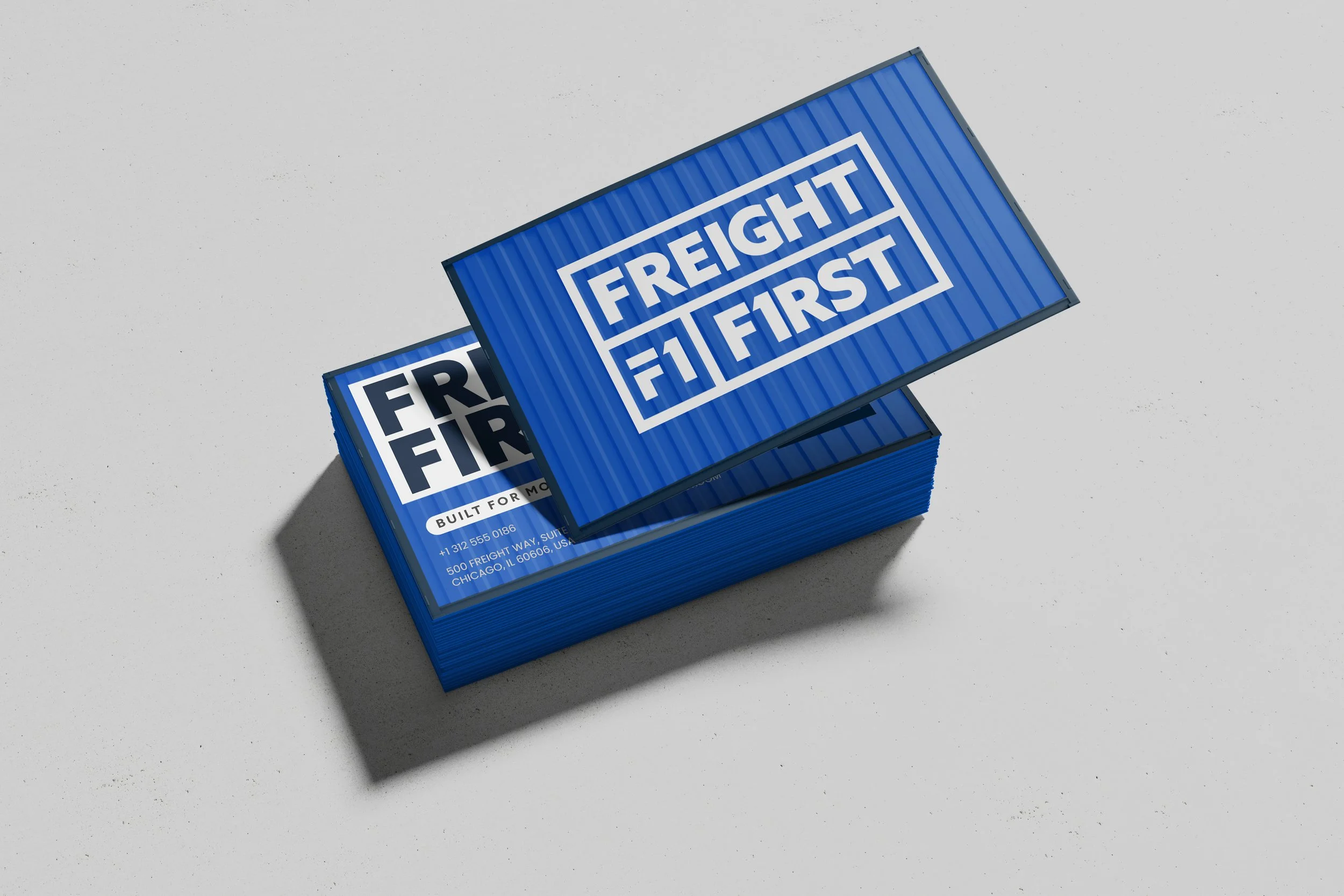
The F1 monogram uses hard geometric brackets, the same shape a shipping label or manifest stamp uses. That's deliberate. The mark should read as functional signage before it reads as a logo.
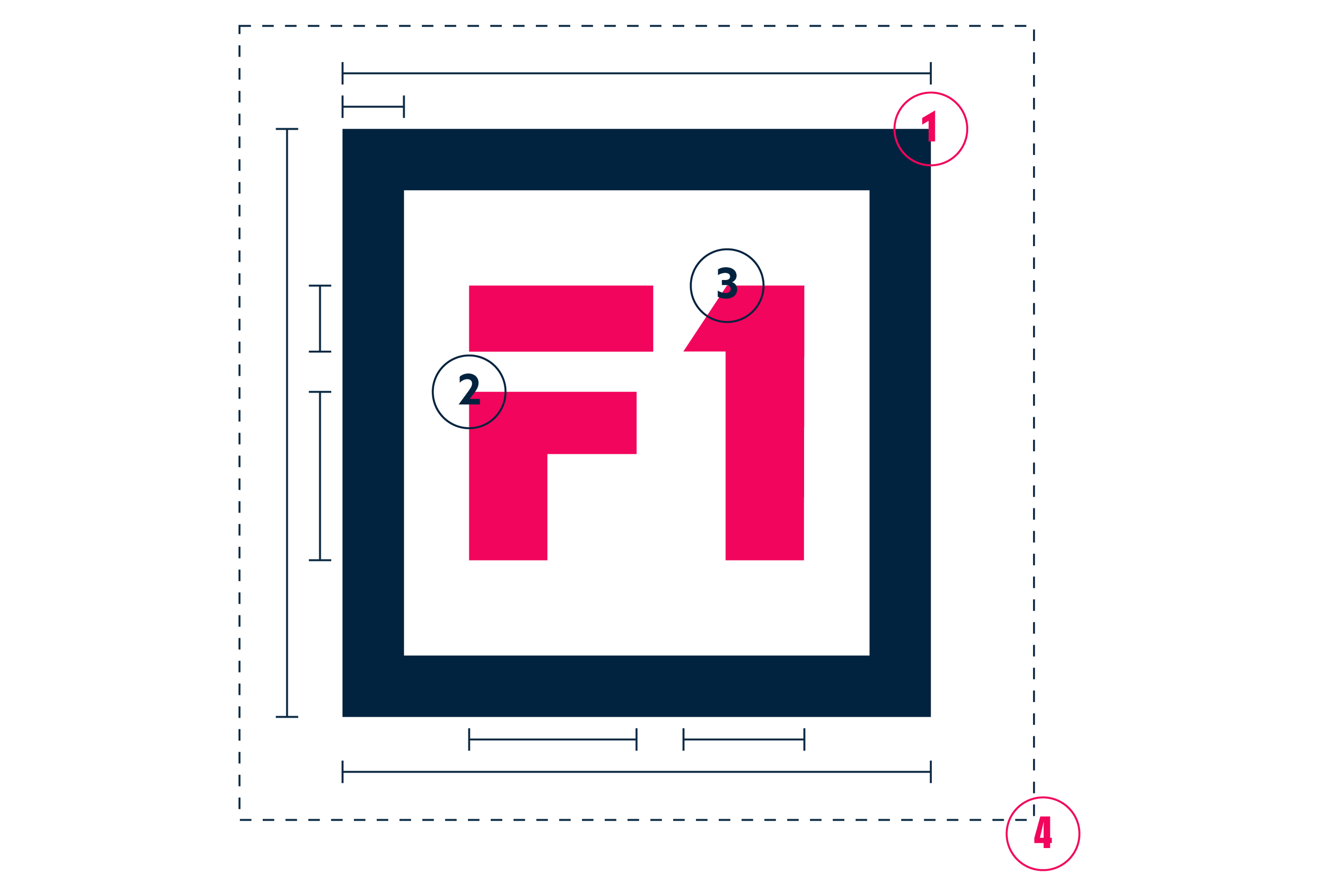
1 - STRUCTURAL FRAME
THE OUTER FRAME REPRESENTS INFRASTRUCTURE, PRECISION, AND THE SYSTEMS THAT CONTAIN AND PROTECT WHAT MATTERS. IT ALSO SERVES AS A MOTION CONTAINER IN THE SYSTEM.
2 - MODULAR "F"
BUILT FROM TWO SOLID BARS THAT CREATE A STRONG, STABLE FOUNDATION. THE OPEN SIDE SUGGESTS FORWARD MOVEMENT AND ACCESSIBILITY.
3 - THE ANGLED TOP OF THE "1"
MIRRORS THE FORWARD CUT OF THE FRAME AND IMPLIES MOMENTUM AND
DIRECTION-ALWAYS MOVING FIRST.
4 - CLEAR SPACE
A MINIMUM CLEAR SPACE EQUAL TO THE THICKNESS OF THE FRAME (1X) MUST SURROUND THE MARK TO PRESERVE LEGIBILITY AND IMPACT.
04 - MOTION SYSTEM
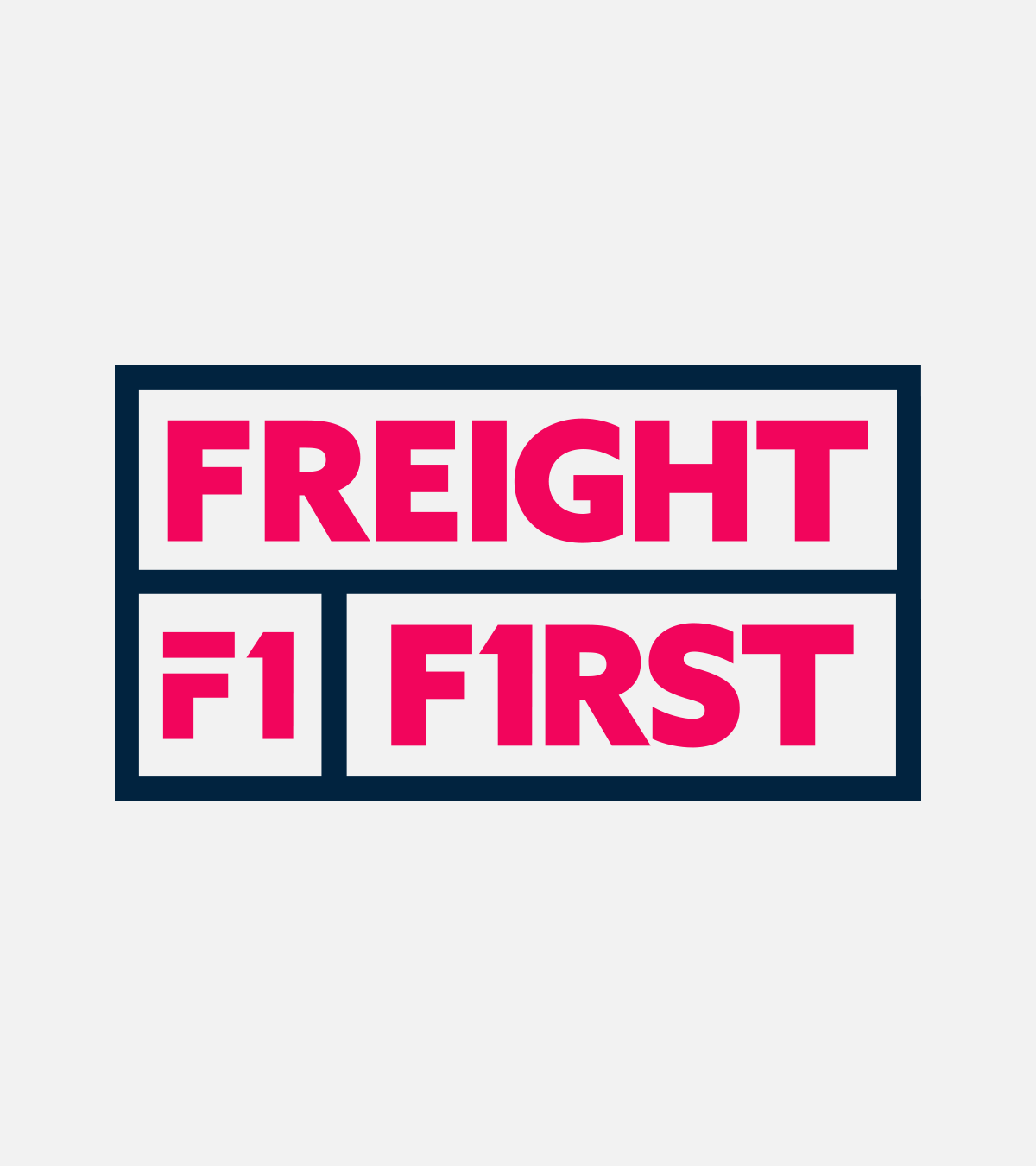
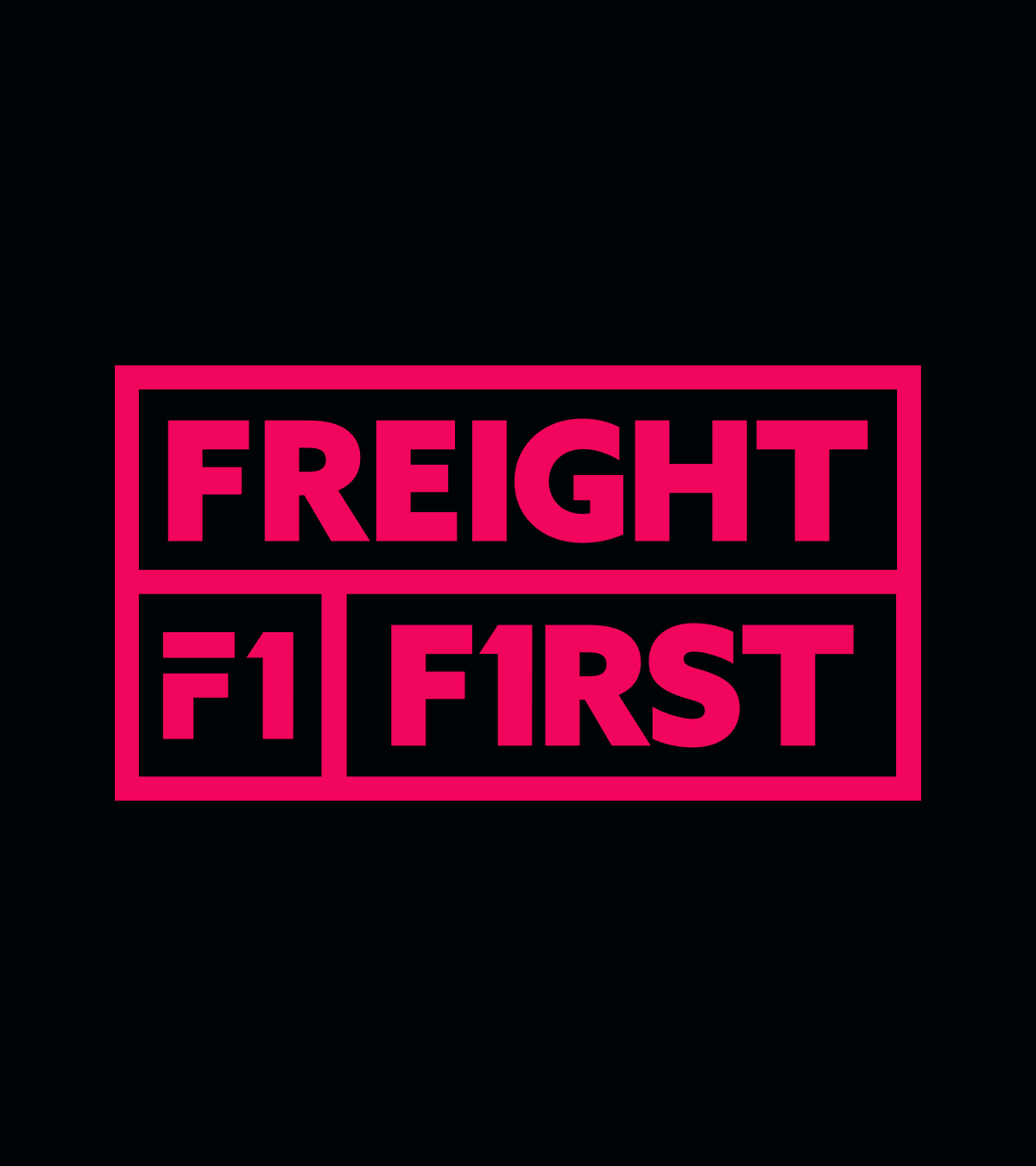
A logistics mark usually sits still once it's built. This one had to move first and rest second — every static lockup on this page is one frame pulled from a system, not a finished mark with motion bolted on after.
Every sequence follows the same logic: structure first, assembly with direction, confirmation on lock, confidence in stillness. Same discipline as the grid underneath the mark — nothing arbitrary, nothing decorative.
main logo:
The F1 mark, frame to still. Structure draws in first, the modules lock into place last — the system announcing itself before it commits to a shape.
wordmark:
The full lockup builds left to right, same as the mark — assembly with a direction, never just a fade-in.
type headline animation:
Even display copy moves with intent, not decoration — type enters the way a shipment moves through a route: direct, no wasted motion.
horizontal lock:
The long-format lockup, built for signage and transit media, resolves the same way the mark does — frame, build, lock, still, at any aspect ratio.
05 — BRAND SYSTEM
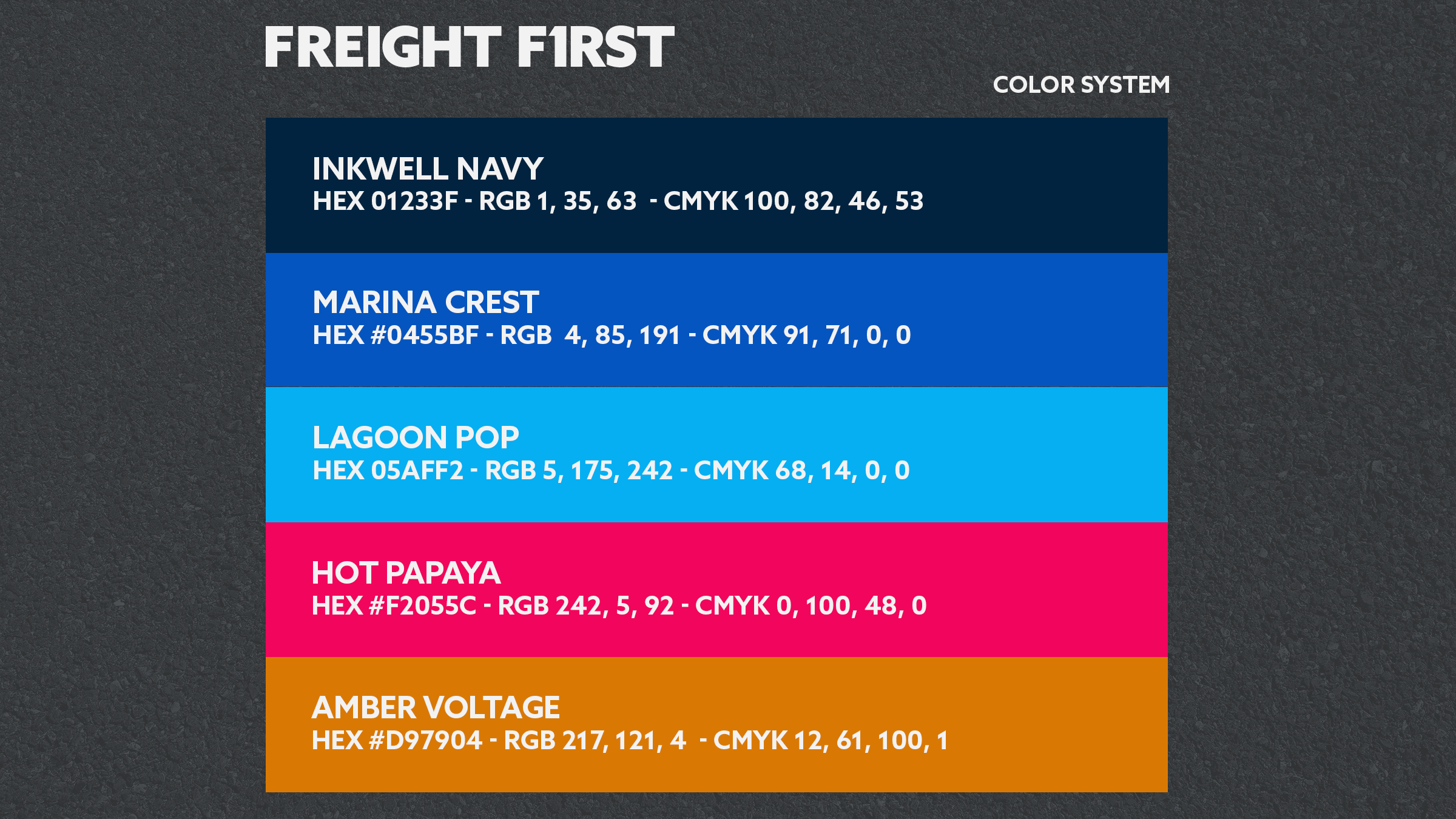
Color breaks from logistics' usual navy-and-beige default. Inkwell Navy and Marina Crest carry the weight and credibility a B2B shipping brand needs, while Hot Papaya and Amber Voltage keep the system from reading as another faceless freight carrier — Lagoon Pop is the one cool accent that stops it from tipping into "generic corporate blue." Naming each color, not just specifying hex codes, makes the palette a point of view before it ever hits a screen.
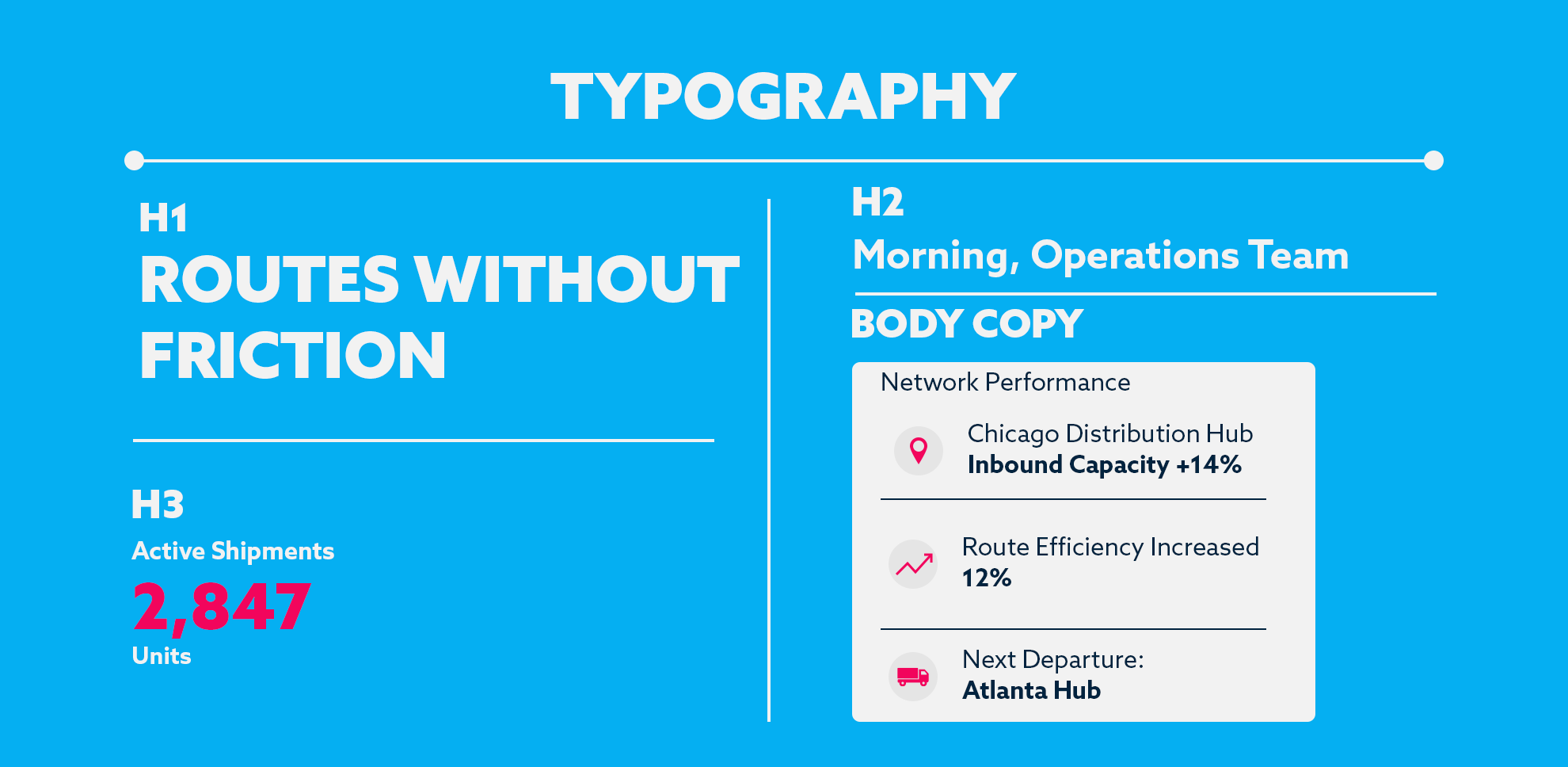
Type pairs a bold, condensed display face for headlines with a cleaner functional sans for data and UI — the condensed face carries the speed and directness of the brand, the second one carries precision for numbers that actually need to be read fast: shipment counts, capacity percentages, departure times.
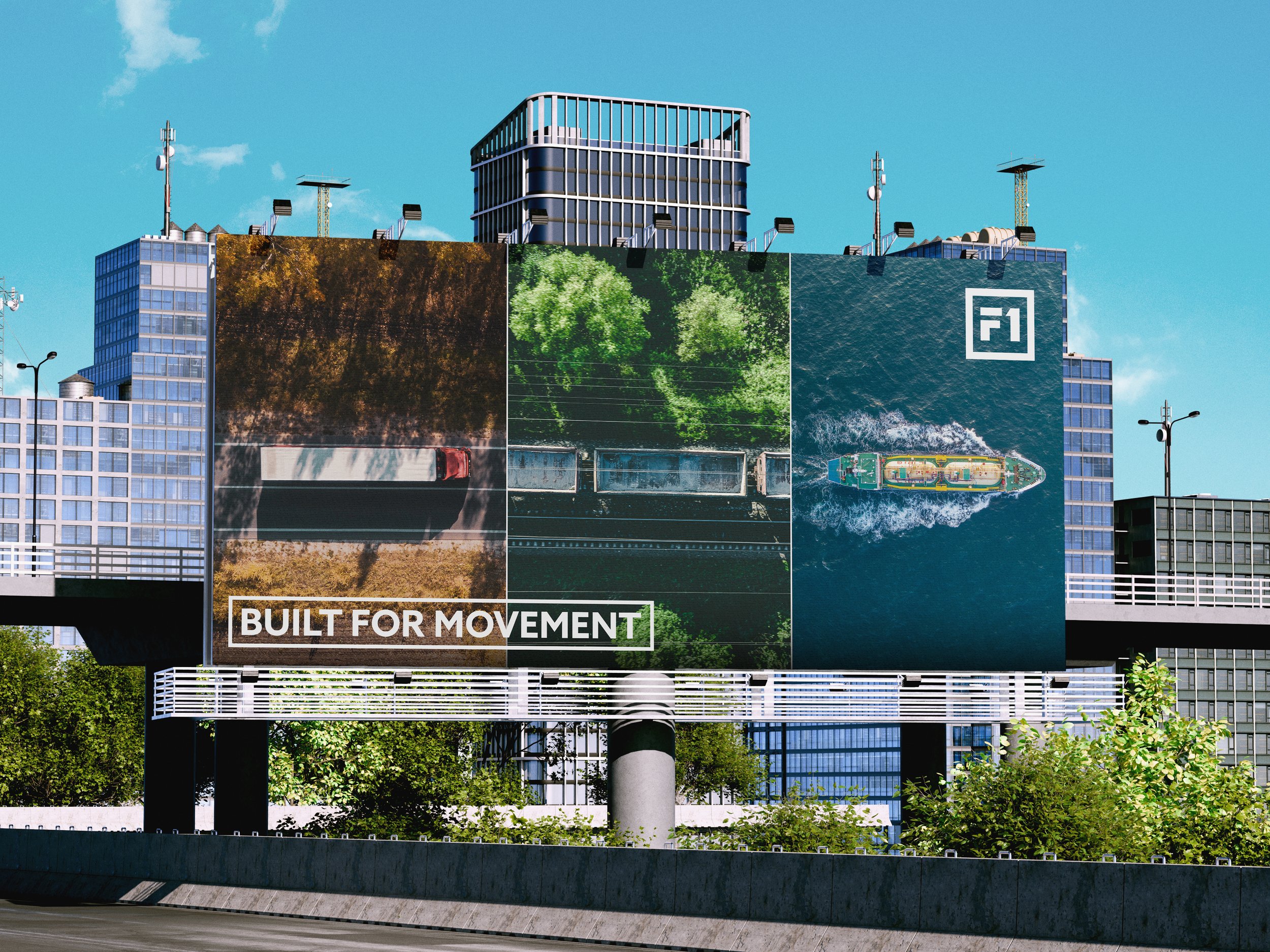
The system holds up wherever it lands, a shipping label at 4x6 inches, a warehouse wall at full scale, a billboard over a highway. Same grid, same restraint, same four colors, applied at every size the brand actually needs to work at.
06 — APPLICATIONS
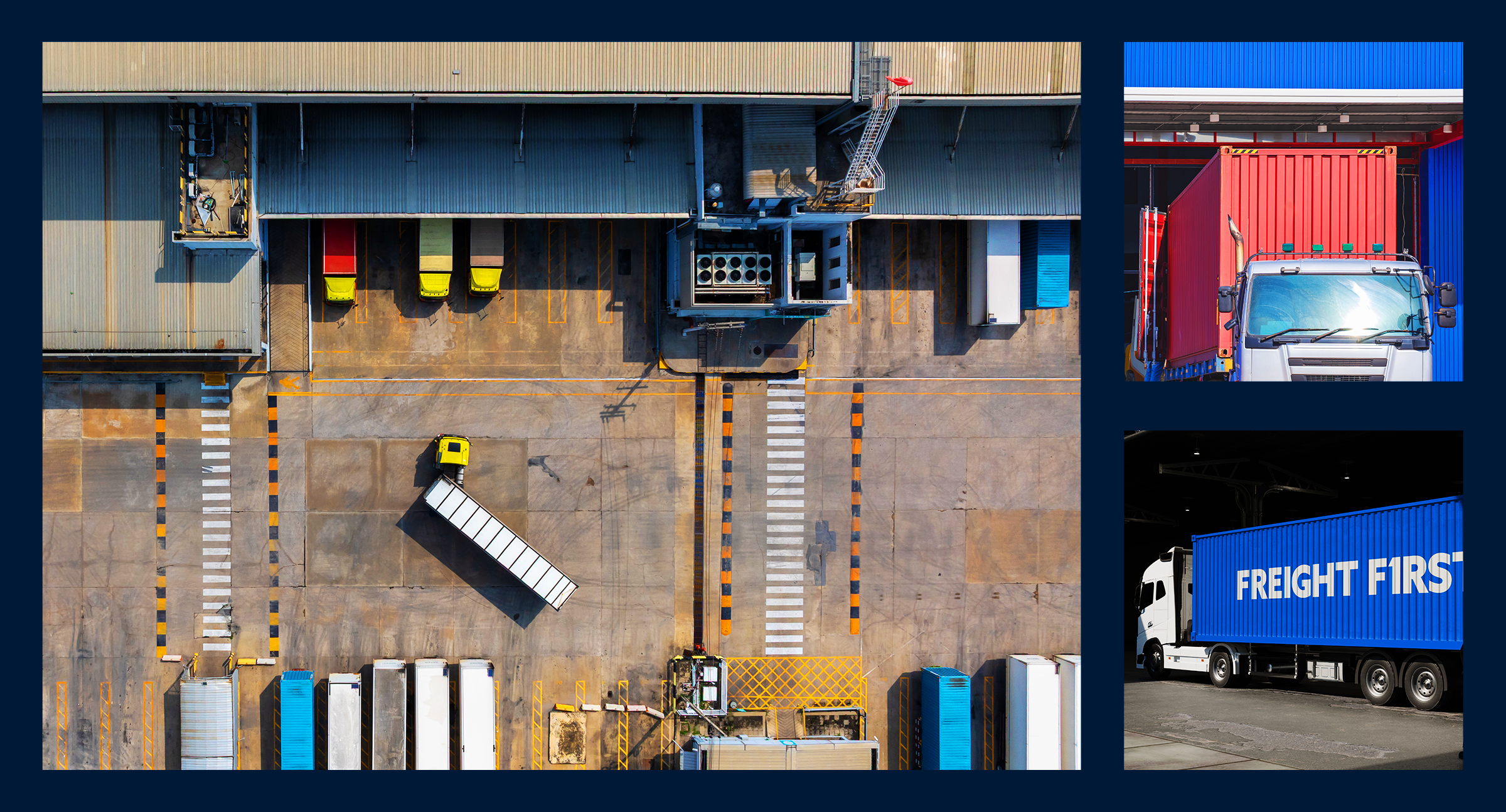
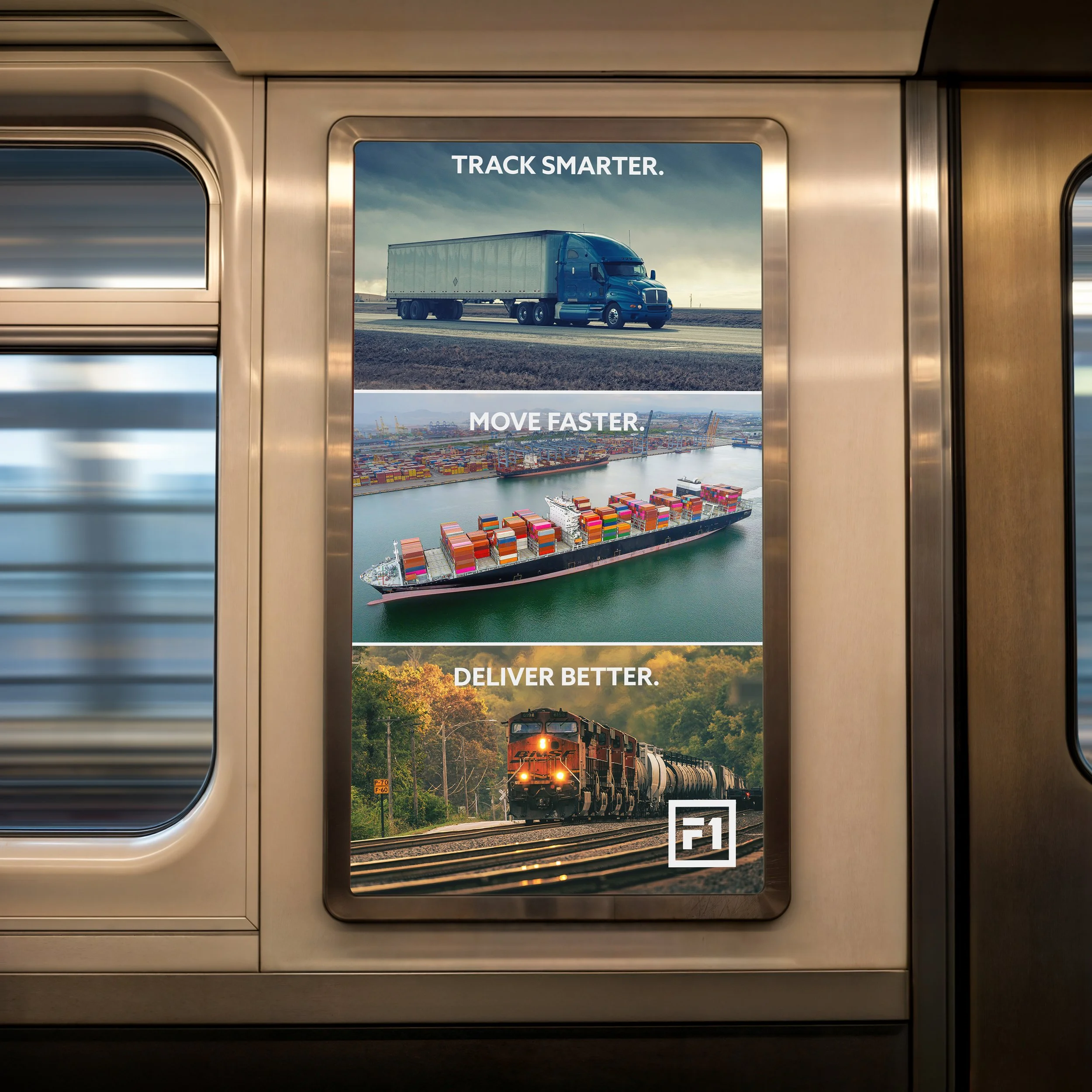
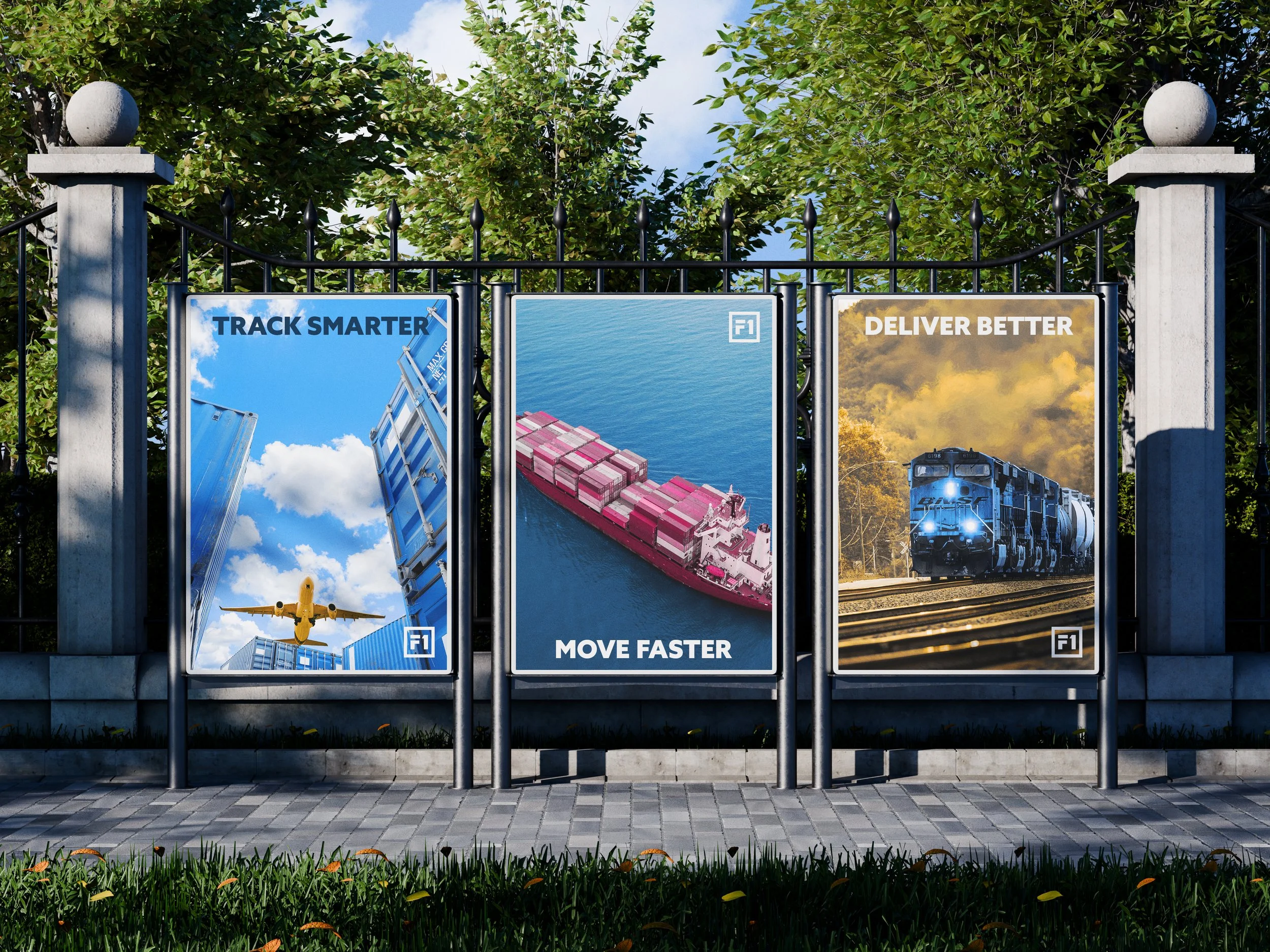
The system holds up wherever freight actually moves, a warehouse dock, a shipping container, a poster on the walk to the train. Same grid, same four colors, same restraint, at every scale.
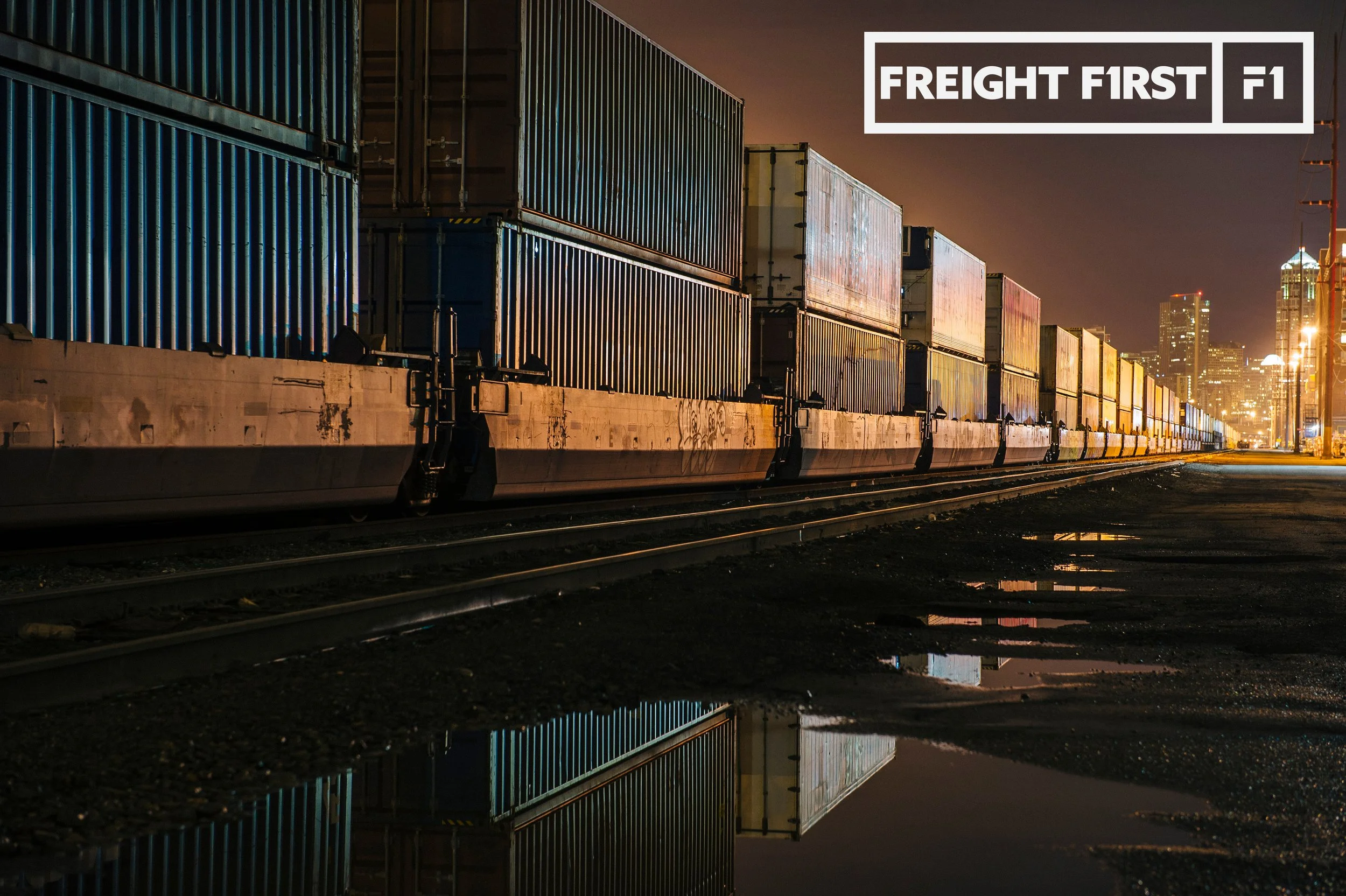
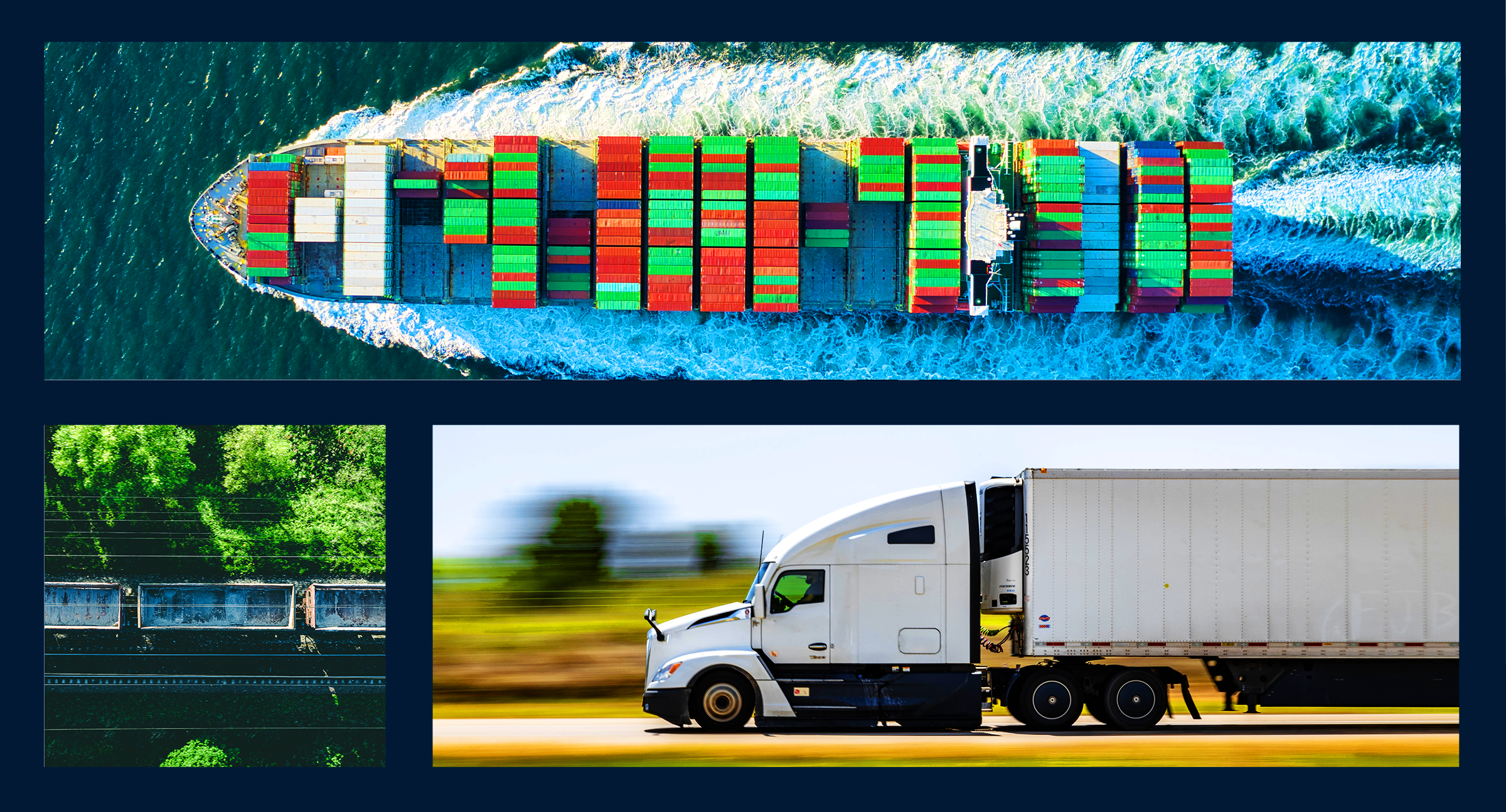
The billboard collage puts real transit photography to work at full scale. The gated posters strip it down further: one message, one mode of transport each, track smarter, move faster, deliver better.
OUTCOME
FreightFirst isn't about proving I can build a wordmark. It's a working example of designing a brand system motion-first, where the static lockup is a single frame pulled from a system, not the other way around.